
EARTHQUAKES in Europe
Earthquakes can neither be prevented nor precisely predicted. Therefore, they have a great potential to cause damage and affect the well-being of society: During the 20th century, earthquakes in Europe accounted for more than 200,000 deaths and over 250 billion Euros in losses (EM-DAT).
However, assessments of earthquake hazard and risk improve the understanding of where strong ground shaking is most likely to occur and what impacts future earthquakes will have. Such models also exist at the European level. They offer comparable information, which is crucial for defining transnational disaster risk mitigation strategies to reduce damage from future earthquakes and protect lives.

EARTHQUAKE HAZARD across Europe
Earthquake hazard describes the potential ground shaking due to future earthquakes in Europe.
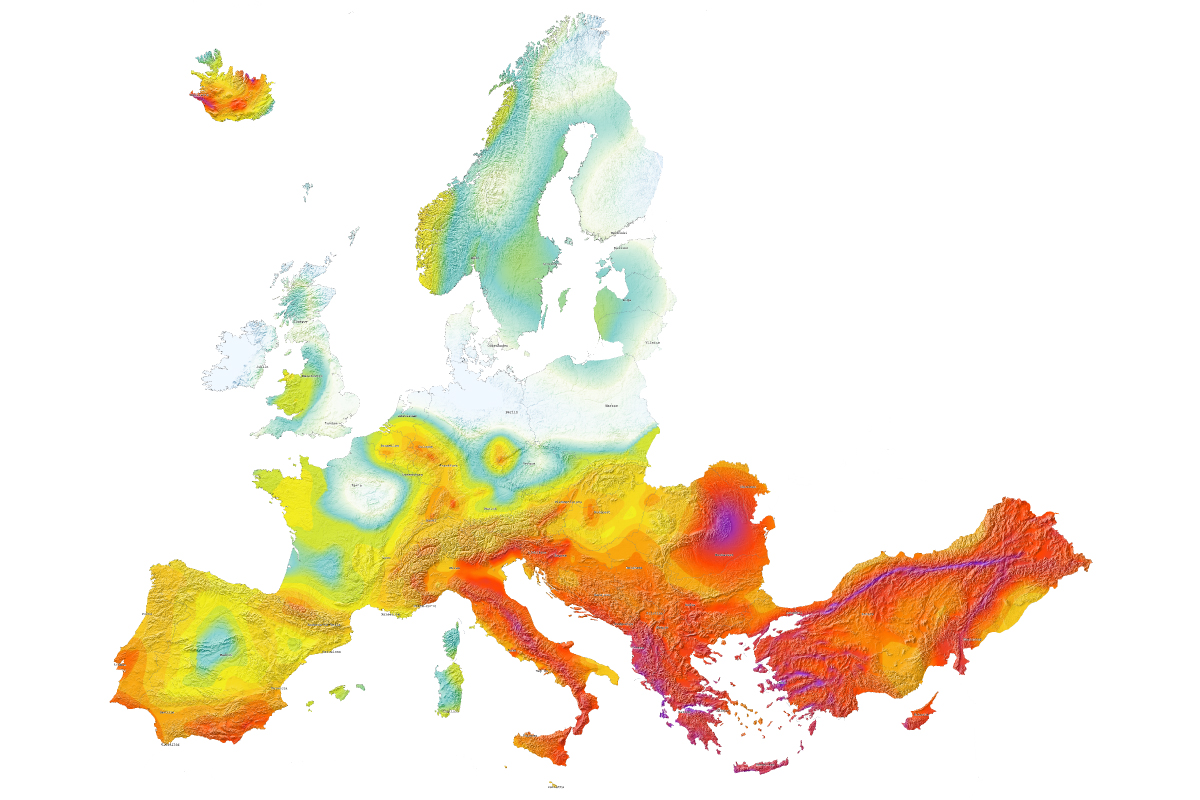 Discover EARTHQUAKE HAZARD across Europe
EARTHQUAKE RISK across Europe
Earthquake risk estimates the impact that can be expected from future earthquakes in Europe.
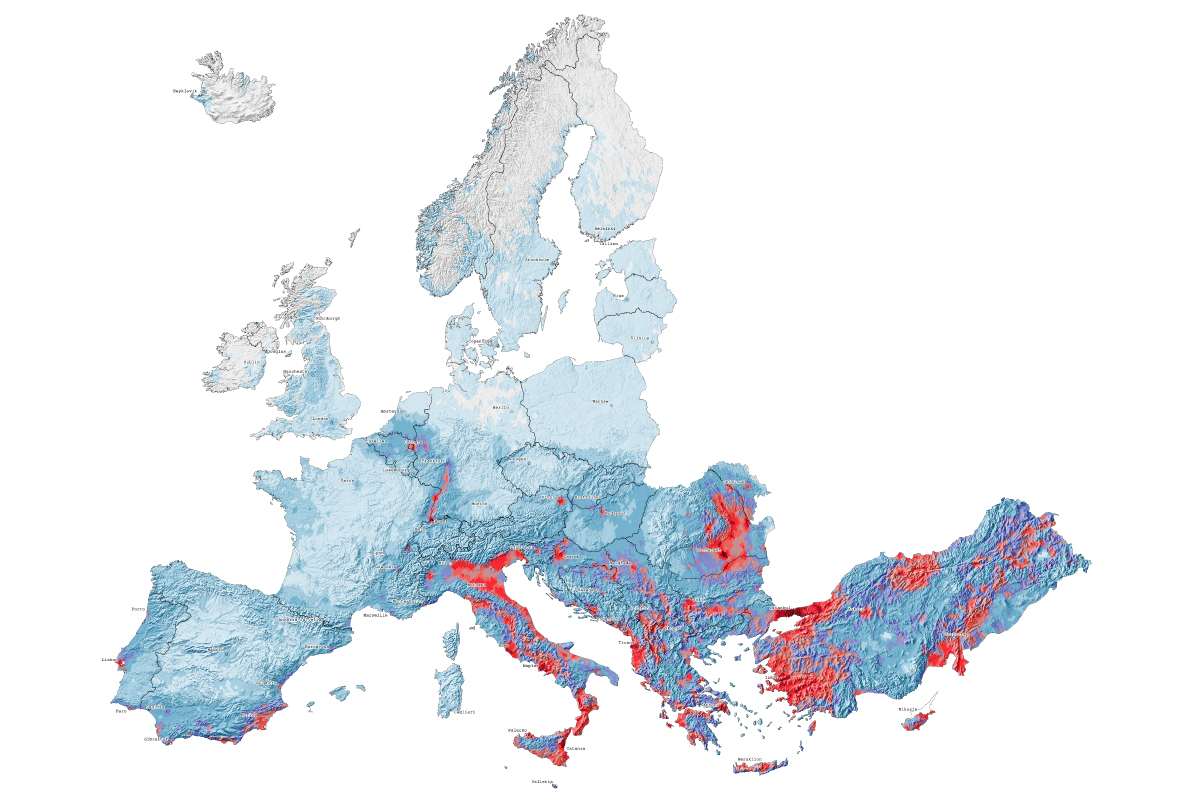 Discover EARTHQUAKE RISK across Europe
The EUROPEAN FACILITIES for earthquake hazard and risk
ABOUT EFEHR
The European Facilities for Earthquake Hazard and Risk (EFEHR) is a non-profit network of organisations and community resources aimed at advancing earthquake hazard and risk assessment in the European-Mediterranean area. EFEHR operates more than six coordinated services for earthquake hazard and risk in the European-Mediterranean region.
Join GeoRiskNet's webinar on cascading societal and human impacts of large disasters
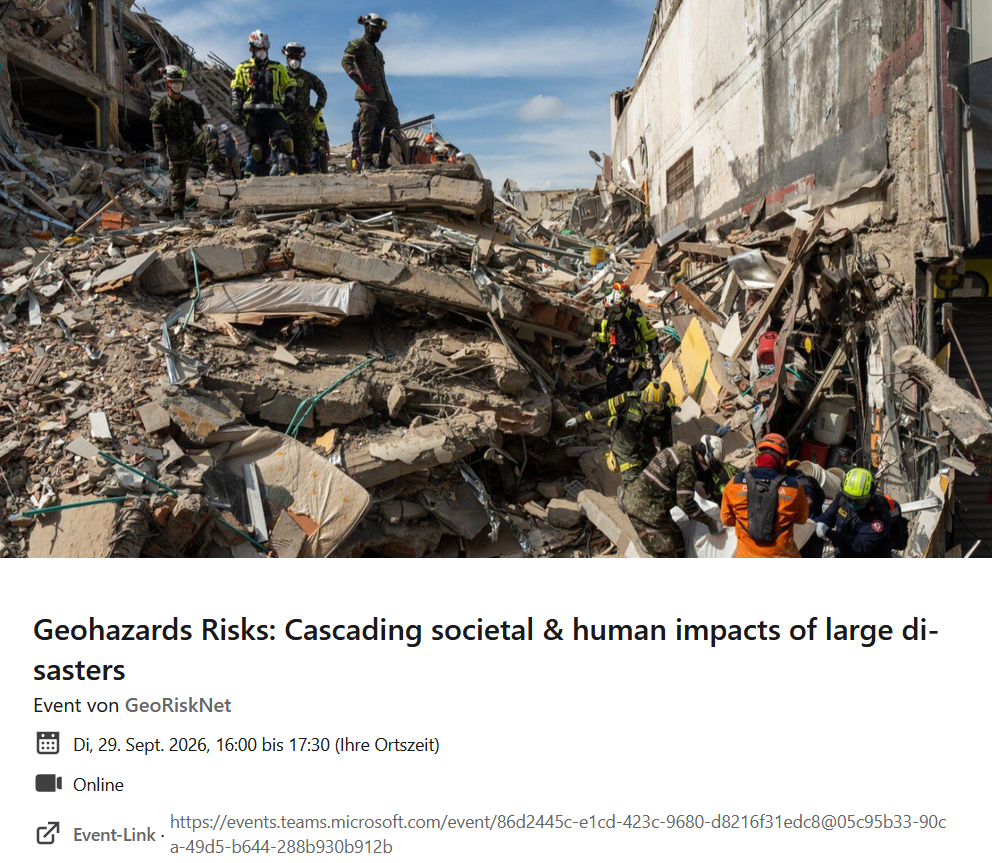
On 29 September, GeoRiskNet will host its next webinar, titled "Geohazards Risks: Cascading Societal & Human Impacts of Large Disasters."
This webinar explores how earthquakes, volcanic eruptions, and other hazards can have cascading impacts on human society. Learn more about the displacement of people from their homes and communities, with recovery often taking years or even decades. Three experts will present their research on the effects of these events, highlighting how they impact communities, livelihoods, and infrastructure in often unexpected ways.
Participation is free of charge and open to all.
- Date: 29 September
- Time: 7:00–8:30 AM PST | 10:00–11:30 AM EST | 3:00–4:30 PM UK | 4:00–5:30 PM CET | 7:30–9:00 PM IST
- Join online: https://www.linkedin.com/events/geohazardsrisks-cascadingsociet7501754516078366720/
About GeoRiskNet
GeoRiskNet is a global network of experts and practitioners dedicated to advancing the understanding of geohazards and risks. Through knowledge exchange, collaboration, and strategic advocacy, the network aims to strengthen resilience and support informed decision-making for disaster risk reduction.